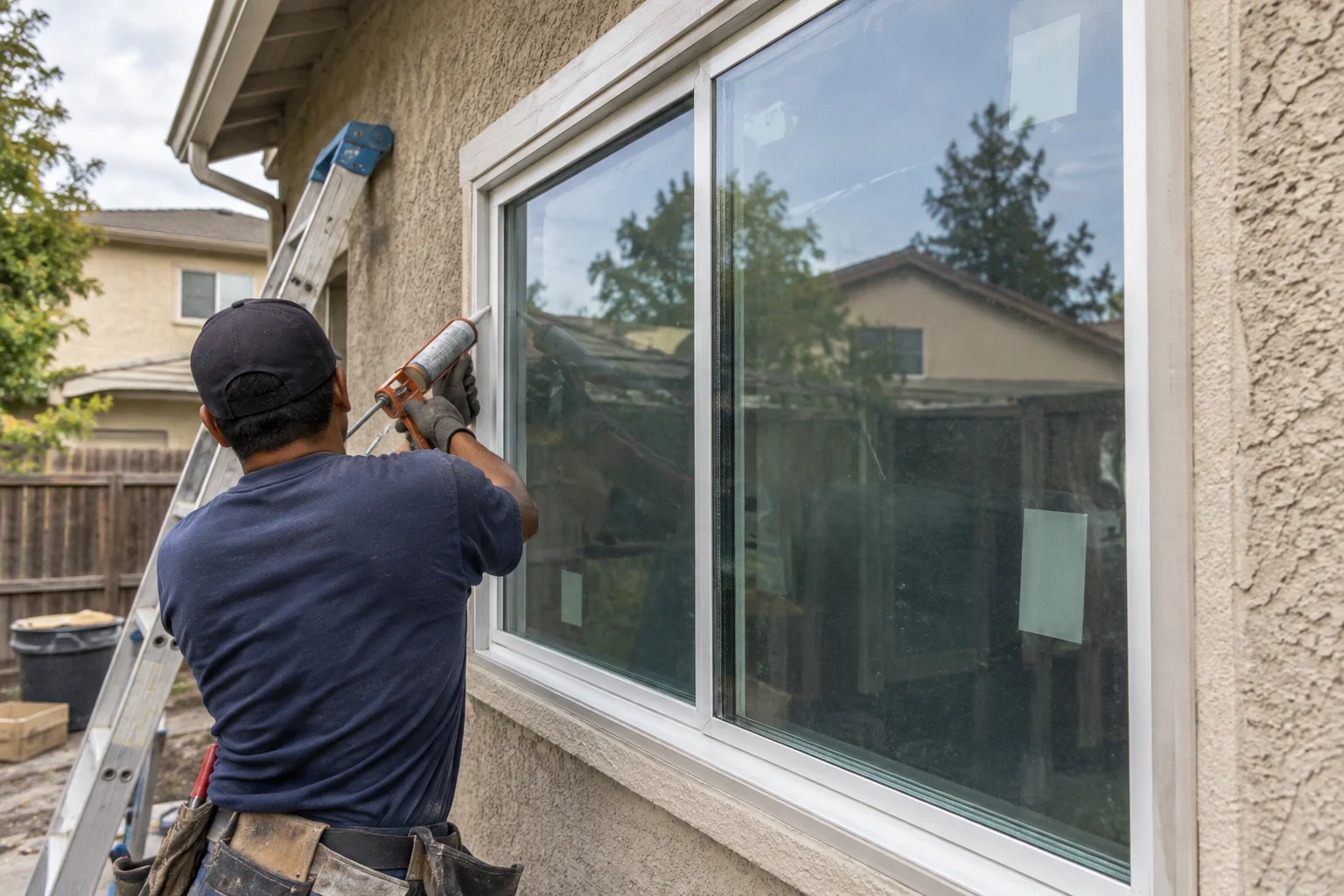
Which Type of Glass Is Best for Windows in Irvine?
Glass makes up most of a window, so the type you pick decides how warm, bright, quiet and safe each room feels.
Which type of glass is best for windows?
For most homes here, the best choice is dual-pane glass with a low-E coating and argon gas between the panes. It blocks heat and UV while keeping rooms bright. Add tempered glass where code requires it, and laminated glass where noise or security matters. We can walk through your options at (949) 638-3312.
What are the main types of window glass?
Most window glass sold today is a package, not a single sheet. The panes, the coating, the gas fill and the safety treatment each do a different job. Knowing what each part does makes it easier to read a quote.
Here is what you will run into when you shop.
- Single-pane glass: one sheet. It lets heat straight through and is mostly found in older homes that still have original windows.
- Dual-pane (insulated) glass: two sheets with a sealed space between them. This is the standard for replacement windows.
- Low-E coating: a thin, nearly invisible metal layer that reflects heat and UV. Different coatings let in more or less of the sun's heat.
- Argon gas fill: a heavier-than-air gas sealed between the panes that slows heat moving through the glass.
- Tempered glass: heat-treated so it breaks into small, dull pieces instead of sharp shards.
- Laminated glass: two sheets joined by a clear plastic layer that holds the glass together if it cracks and cuts outside noise.
Which glass keeps a house cooler in summer?
In our area the big job for glass is keeping heat out, not holding it in. Winters are mild, but summer sun on a west or south wall can turn a bedroom into an oven by late afternoon. That is where the low-E coating earns its keep.
When you compare windows, look at the sticker for two numbers. The U-factor tells you how well the glass stops heat from passing through. The solar heat gain coefficient, or SHGC, tells you how much of the sun's heat gets in. Lower is better for both in a warm climate. A low-SHGC coating on dual-pane glass with argon is the setup we recommend for most sunny rooms.
There is a trade-off. Some of the strongest coatings add a slight tint and let in a bit less daylight. On a shaded north wall you can often use a lighter coating and keep the room brighter. We look at which way each window faces before we suggest one.
Is triple-pane glass worth it here?
Usually not. Triple-pane glass shines in places with long, freezing winters, where holding heat in matters most. In a mild coastal climate, a good dual-pane low-E window handles the heat with less weight and lower cost.
Triple-pane can make sense in a few spots, like a bedroom next to a busy road where you want the extra sound control. Even then, laminated glass in a dual-pane unit often does the noise job better. We will tell you plainly if the extra pane is not buying you much.
Where do you need tempered or laminated glass?
Building code requires safety glass in certain spots, and we follow it on every job. Tempered glass is required in places where someone could walk or fall into a pane. Sliding doors and multi-folding doors use it throughout for the same reason.
Laminated glass is a choice more than a rule. It holds together when it breaks, which helps with security on ground-floor windows. It also blocks nearly all UV, so floors and furniture fade more slowly. And it is one of the best ways to quiet a room facing a street.
Glass railings on a balcony or deck need their own safety rating. That work is covered on our custom glass railings page.
- Windows in or near a tub or shower
- Large panes close to the floor
- Glass next to a door
- Sliding and folding door panels
- Windows near stairs and landings
How do frame material and glass work together?
Great glass in a poor frame still leaks heat. Many homes in Irvine and nearby towns like Tustin and Lake Forest still have their first aluminum windows. Bare aluminum moves heat fast, and the seals around older dual-pane units fail over time. When they fail you see fog between the panes, and the argon is gone.
Vinyl frames insulate well, need little upkeep and pair nicely with low-E glass. Fiberglass is stiffer and handles big sun exposure with less movement. We bring samples to the estimate so you can see the frames and the glass side by side. If your frames are sound, window retrofitting can swap in new units without tearing out stucco. If they are not, full window replacement is the better answer.
More Questions About Window Glass
- Does low-E glass look dark from inside?
- Most modern low-E glass looks clear. Coatings built for strong sun can add a faint gray or green tint, which is easier to judge in person, so we bring samples to the estimate.
- Do replacement windows need to meet energy code in California?
- Yes. The state energy code sets limits on how much heat new and replacement windows can let through. The windows we install meet those limits, and we handle the permit when one is needed.
- What does obscure glass do?
- Obscure or frosted glass lets light in but blurs the view. It is common in bathrooms and can be combined with tempered glass and low-E coatings in the same window.
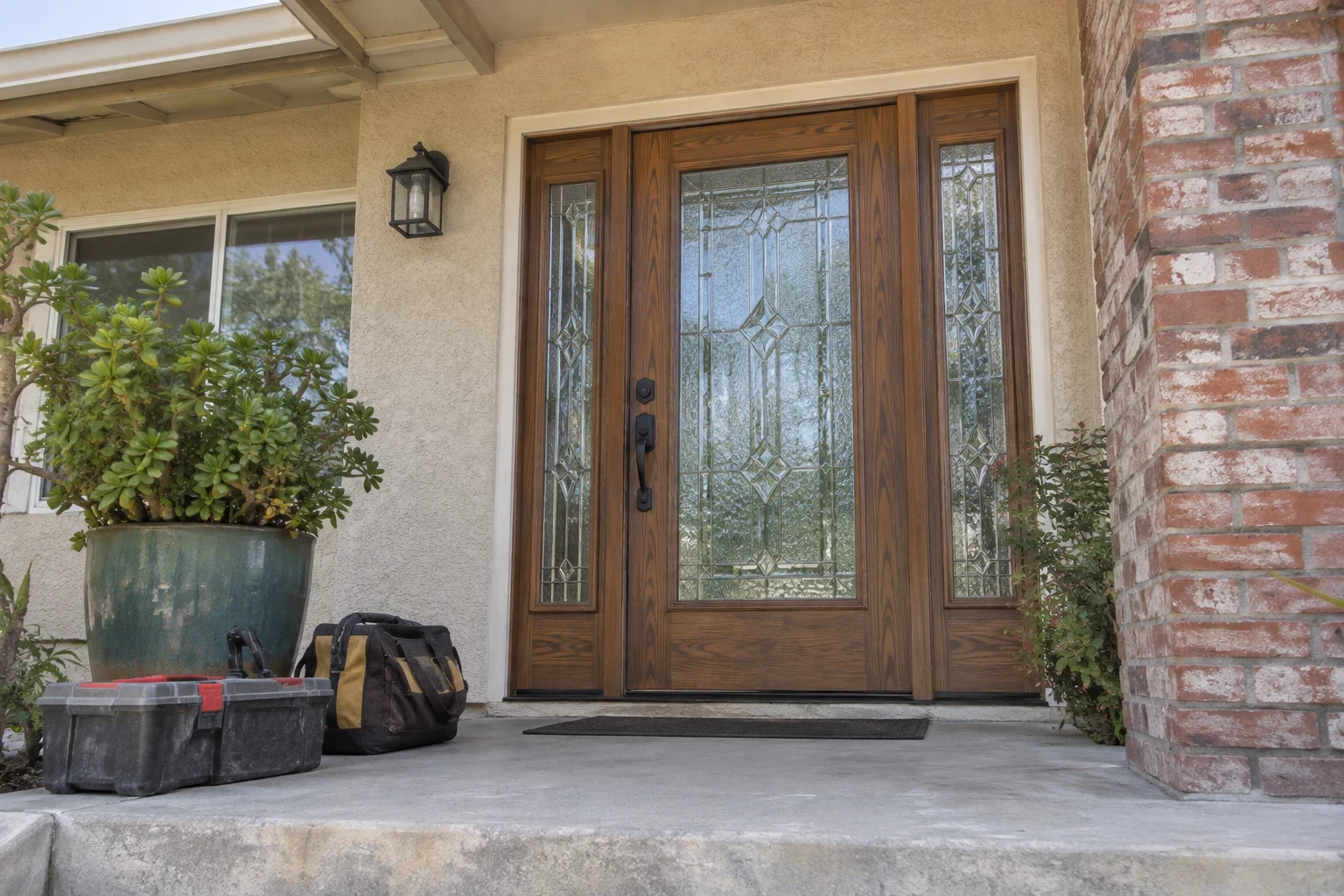
See the Glass Options in Your Own Home
We come out, look at each window and which way it faces, and show you glass and frame samples. You get a free in-home estimate with no sales pressure or obligation.