ServicesEnergy Efficient Windows
Energy Efficient Windows in Irvine
We replace drafty, sun-baked windows with dual-pane low-E glass in vinyl or fiberglass frames. We walk you through each option, show you the ratings on the label and help you pick the right glass for each side of your home.
What Makes a Window Energy Efficient
An efficient window is a few parts working together. Two panes of glass with argon gas sealed between them slow heat moving through. A thin low-E coating on the glass reflects the sun's heat but lets daylight in. A warm-edge spacer keeps the edges of the glass from sweating. The frame matters too. Vinyl and fiberglass hold far less heat than the old aluminum frames in many homes.
Here the bigger problem is summer heat. Most of our work is about keeping sun out of west and south rooms. So we look at solar heat gain first, then insulation. Every window we offer carries an NFRC label. We show you the U-factor and solar heat gain numbers and explain what they mean before you choose anything.
What You Get With the Job
- Glass picked by wall
- A west wall that bakes every afternoon needs a different low-E coating than a shaded north window. We match the glass to where each window faces, so you are not paying for more coating than a room needs.
- Frame material explained
- Vinyl is the most common choice. It insulates well and needs little upkeep. Fiberglass costs more but stays stiffer in heat and allows slimmer frames. We bring samples so you can see and feel both.
- Measured openings
- We measure every opening ourselves. A tight fit matters as much as the glass. A gap around a good window still leaks air.
- Sealed and insulated install
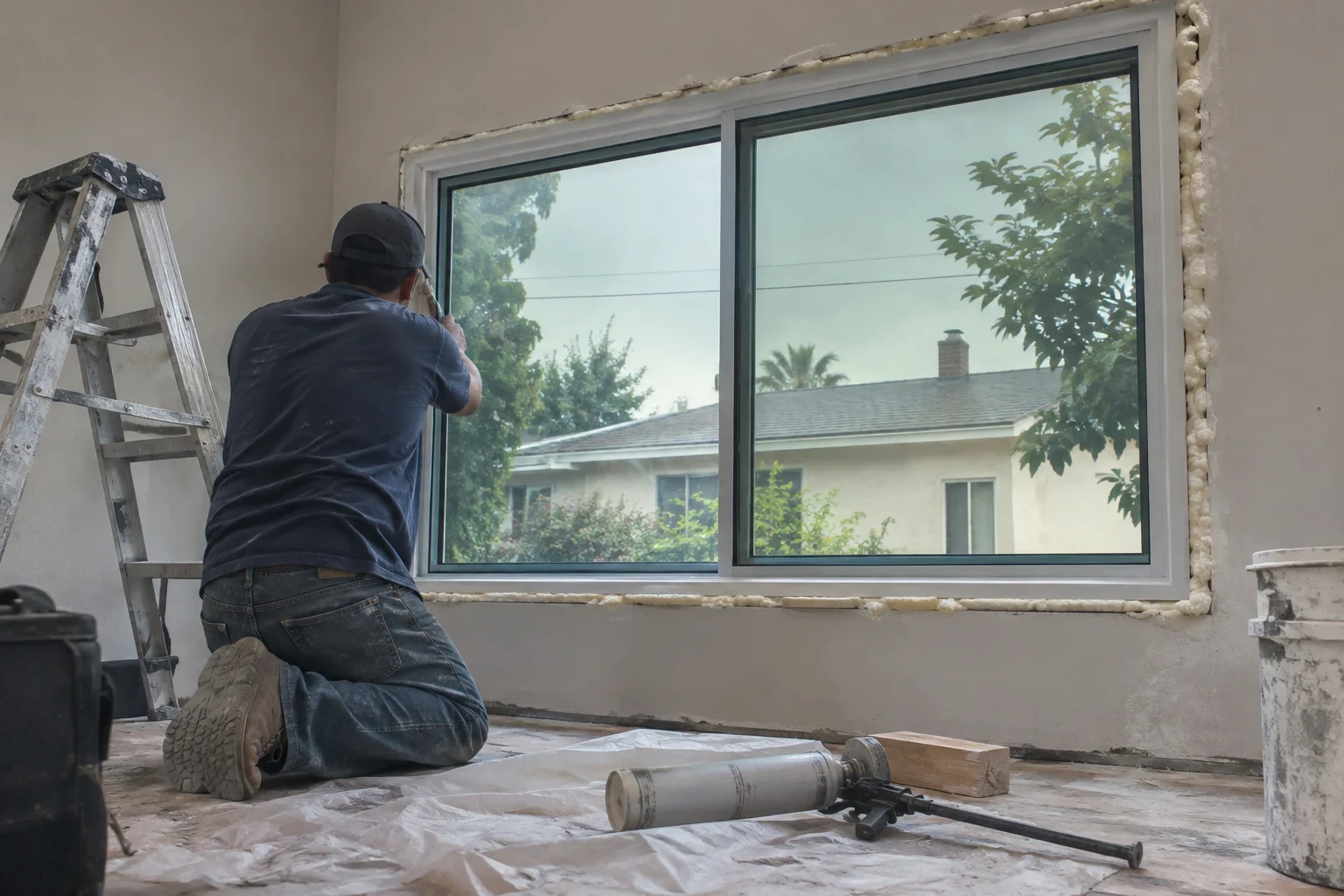
- We foam or insulate the gap between the new frame and the wall, then seal the outside so air and water stay out.
- Permit paperwork
- Replacement windows in California have to meet the state energy code for how much heat they let through. If your job calls for a permit, we file for it and book the city inspection ourselves.
- Cleanup and haul-away
- We take the old windows with us and clean up glass, dust and sealant before we leave.
Signs Your Windows Are Costing You
Rooms that stay hot
If a bedroom is still warm at night after the sun sets, the glass is letting heat pour in all afternoon. Older clear glass has no coating to stop it.
Fog between the panes
A milky haze inside a dual-pane window means the seal has failed. The gas is gone and the window insulates little better than a single pane.
Single-pane aluminum frames
Many homes built in the 1970s and 80s still have them. Aluminum carries heat straight through, and the frame is often hot to the touch in summer.
Faded floors and furniture
Sun fading on rugs, wood floors or a couch near a window is a sign the glass lets through a lot of UV. Low-E glass blocks most of it.
Air you can feel
A draft near a closed window, or whistling when the wind picks up, means worn weatherstripping or a frame that no longer seals.
What Moves the Price
Two things set your price: the windows you choose and the condition and size of the openings in your walls. Each window gets its own line on our written price, so you can see where the money goes. If you want to bring the total down, we will say plainly where a cheaper choice is fine and where it is not.
Frame material
Vinyl costs less than fiberglass. Both insulate far better than aluminum. The choice often comes down to looks, frame width and how much sun the window takes.
Glass package
Standard dual-pane low-E with argon covers most homes. Extra coatings, laminated glass for noise or triple pane add cost and only pay off in certain rooms.
Size and shape
Large picture windows, arches and odd shapes cost more to build than standard sizes.
Retrofit or full frame
Setting a new window into the existing frame keeps stucco intact and costs less. If the old frame is damaged, a full-frame install is needed. Our Window Retrofitting page covers the difference.
Number of windows
Doing several windows at once spreads out setup and travel. Ask us about our current multi-window pricing when you get your quote by phone.
How the Work Goes
- 1
The estimate at your home
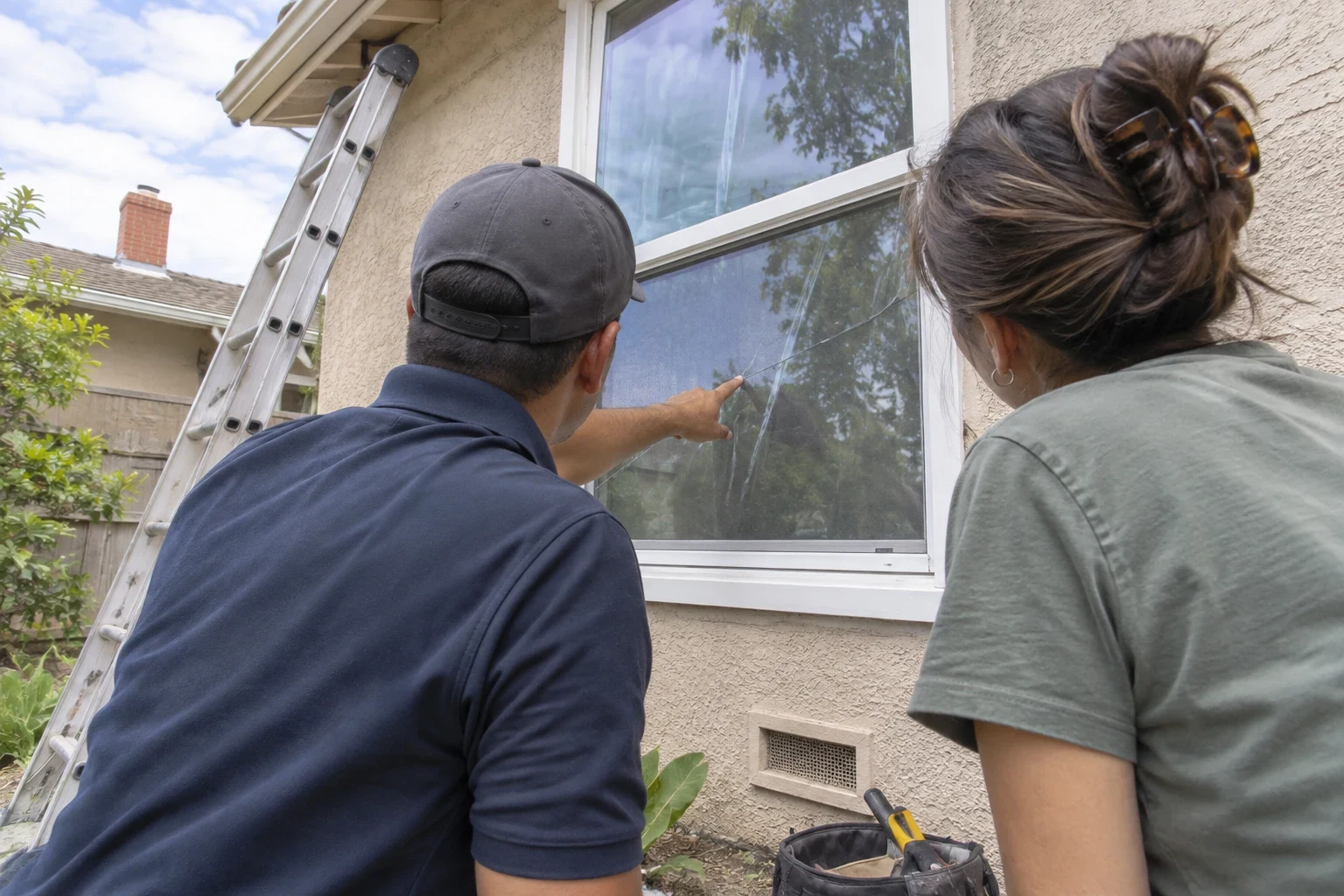
We come out, look at every window and note which way each one faces. We show you glass and frame samples, explain the trade-offs and give you a written price. There is no pressure and no obligation.
- 2
Ordering
Once you pick your windows, we order them built to the measurements we took. Each one comes with its NFRC label so you can check the ratings yourself.
- 3
Install day
We lay drop cloths inside and set out the work area outside. Windows come out and go in one opening at a time, so only one spot in your walls is ever open. Every new unit gets leveled, fastened, insulated and sealed before we move to the next.
- 4
Final check and walkthrough
We open, close and lock every window with you. If an inspection is needed, we meet the inspector. Then we haul away the old units and clean up.
Questions About Energy Efficient Windows
Will new windows lower my electric bill?
They usually cut the heat coming in, so your AC runs less in summer. How much you save depends on your old windows, your insulation and how you use your home. We will not promise a number. Going from single-pane aluminum to dual-pane low-E is the biggest jump most people see.
Do I need triple-pane glass here?
For most homes, no. Triple pane is built for cold winters, and our climate is mild. A good dual-pane window with the right low-E coating handles summer heat well. We sometimes suggest laminated glass instead for rooms near a busy road, since it helps with noise.
Will low-E glass make my rooms look dark or tinted?
Modern low-E coatings are close to clear. Some stronger sun-control coatings have a slight gray or green look, mostly from outside. We bring samples so you can hold them up to your own light before you decide.
Vinyl or fiberglass, which is better?
Both are good. Vinyl costs less and works well in most openings. Fiberglass holds its shape better in hard sun and can be painted, so it suits big windows and dark colors. We will tell you which fits each opening and why.
Do energy efficient windows need a permit?
Many replacement window jobs do, and the windows have to meet the state energy code. When a permit is required, we pull it and handle the inspection, so you do not have to deal with the city yourself.
See the Glass Before You Choose
We bring samples to your home, show you the ratings and give you a written price. The estimate is free, with no sales pressure and no obligation.